
High-Protein Breakfast Ideas for Women Over 40
Something shifts when you hit 40.
You are eating the same way you always have. You are not doing anything differently. But somehow, you feel more tired. The weight is harder to manage. Your energy is not what it used to be. And no matter what you try, something just feels… off.
You are not imagining it. And it is not your fault.
Your body is going through real, science-backed changes at this stage of life. And one of the biggest things you can do to feel better — starting tomorrow morning — is change what you eat for breakfast.
Specifically, you need more protein. And you need it earlier in the day.
This article is going to explain why protein matters so much for women over 40, how much you actually need, and give you 10 easy, delicious breakfast ideas you can start using this week. No complicated diets. No expensive supplements you have to buy. Just real food, explained simply.
Why Your Body Changes After 40 — And Why Breakfast Matters More
Here is something most women do not know: after age 40, your body becomes less efficient at using protein.
This means even if you eat the same amount of protein you always have, your muscles may not be getting as much benefit from it as they did when you were younger. Researchers call this “anabolic resistance” — your body becomes a little more resistant to building and maintaining muscle from the protein you eat.
At the same time, something called sarcopenia starts happening. That is the gradual loss of muscle mass that begins in your 30s and speeds up after 40. After 40, women face age-related muscle loss and hormonal shifts which increase protein needs, especially around menopause.
Then there is the hormone piece. Perimenopause and menopause bring a decline in estrogen — a hormone that plays a key role in maintaining lean muscle mass and bone density. As estrogen levels dip, the body becomes less efficient at synthesizing muscle protein, meaning it takes more dietary protein to maintain the same muscle mass.
That is a lot happening at once. But here is the hopeful part: eating more protein — especially at breakfast — is one of the most well-studied and practical ways to push back against all of this.
Research consistently shows that higher protein intake helps minimize muscle loss, maintain mobility, and reduce the risk of fractures in older adults. Yet during menopause, women often consume less protein, even though their need for it increases.
So the solution is not complicated. You just need to eat more — and eat it smarter, starting with that first meal of the day.
How Much Protein Do Women Over 40 Need at Breakfast?
This is where things get more specific than general advice.
The old standard recommendation of 0.8 grams of protein per kilogram of body weight per day was designed as a minimum for healthy adults — not an optimal target for women in midlife going through hormonal changes.
Emerging research highlights that women in perimenopause and beyond need to consume 30 to 50 grams of protein at breakfast or their first meal of the day to build muscle effectively.
Research evidence would suggest that for older adults, a larger dose of protein is required at each meal — around 30 to 40 grams — and studies that used a higher protein dose demonstrated greater improvements than those that provided 20 grams.
Rather than loading all your protein at dinner, aim for 20 to 35 grams of protein at each meal. This improves muscle protein synthesis and blood sugar stability throughout the day.
So practically speaking: aim for 30 to 40 grams of protein at breakfast. That is the sweet spot for women over 40 based on current research.
What Protein Actually Does for Women Over 40
Before we get to the breakfast ideas, let us look at exactly what protein is doing for your body at this stage of life. This is important — because once you understand it, you will never want to skip a protein-rich breakfast again.
1. It Protects Your Muscles
Every decade after 40, women can lose 3 to 8 percent of their muscle mass if they do not actively work against it. Combining strength training with adequate protein can delay the onset of frailty, improve bone density, and support a higher quality of life. Even without exercise, eating enough protein every day slows that muscle loss significantly.
2. It Supports Your Bones
Bone loss accelerates after menopause due to declining estrogen. While calcium and vitamin D are important, protein also plays a direct role in bone health by supporting collagen production and calcium metabolism.
Most women think of calcium when they think about bone health. But protein is equally important — and far less talked about.
3. It Helps Balance Your Hormones
Protein aids in the production of hormones, which is crucial during the hormonal fluctuations of menopause. Amino acids from protein are the raw materials your body uses to make many of the hormones that regulate your mood, energy, sleep, and metabolism.
4. It Keeps Your Energy Steady All Morning
Starting the day with protein can boost your energy and keep you full longer, preventing mid-morning energy crashes. When you eat mostly carbs at breakfast, your blood sugar spikes and then crashes — leaving you tired and hungry by mid-morning. Protein slows all of that down.
5. It Supports Healthy Skin, Hair and Nails
Protein contributes to the health of skin, hair, and nails, which can be affected by hormonal changes. If you have noticed changes in your skin texture or hair thickness since your 40s — more protein in your diet can genuinely help.
10 High-Protein Breakfast Ideas for Women Over 40
Each idea below is designed with women in midlife in mind — easy to make, rich in the right kinds of protein, and gentle on digestion. Where possible, each recipe uses leucine-rich foods, which are especially important for women over 40 because leucine is the specific amino acid that triggers muscle protein synthesis most powerfully.
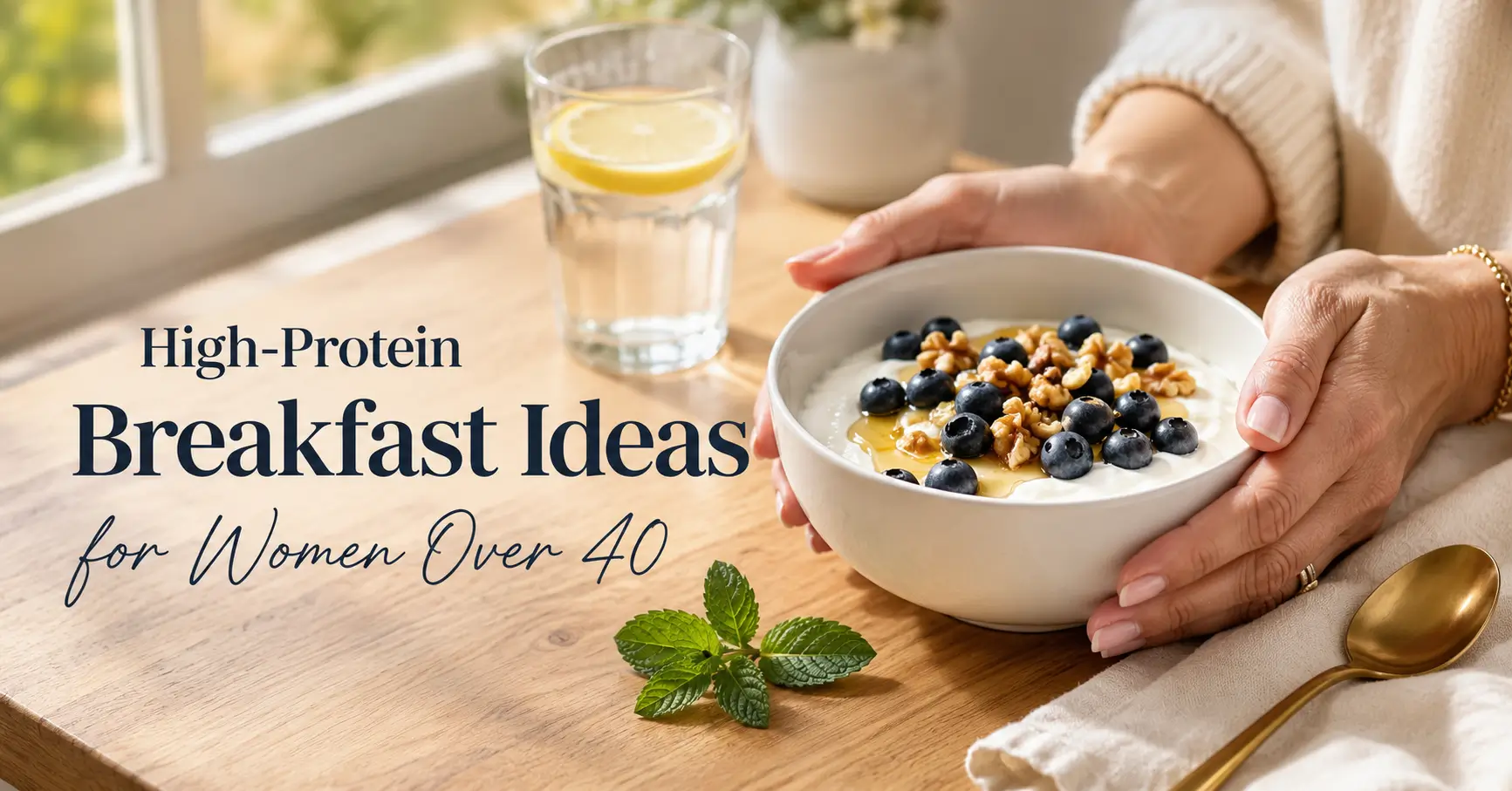
1. Greek Yogurt Bowl with Walnuts and Berries
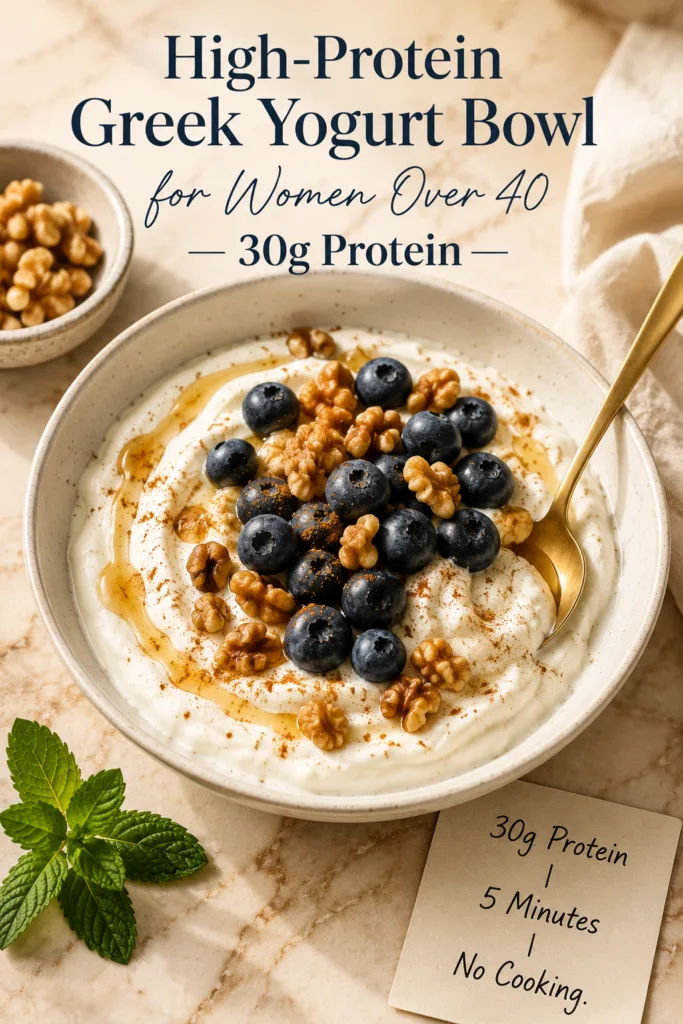
Protein: ~30–35g | Time: 5 minutes | No cooking
Greek yogurt is one of the best breakfast foods for women over 40. It is high in protein, rich in calcium for bone health, and contains probiotics that support gut health — which is increasingly important as digestion changes with age.
Add a scoop of vanilla protein powder mixed into the yogurt to boost the protein to 30–35 grams. Top with walnuts (great for brain health and omega-3s), fresh blueberries (loaded with antioxidants), and a drizzle of honey.
What to use:
- 1 cup plain Greek yogurt
- 1 scoop vanilla protein powder
- A handful of walnuts
- A handful of blueberries
- A small drizzle of honey
Why it works for over 40: Greek yogurt is a complete protein — meaning it has all the essential amino acids your muscles need. The calcium supports bone density. The walnuts add healthy fats that support brain and heart health.
2. Smoked Salmon and Egg Scramble
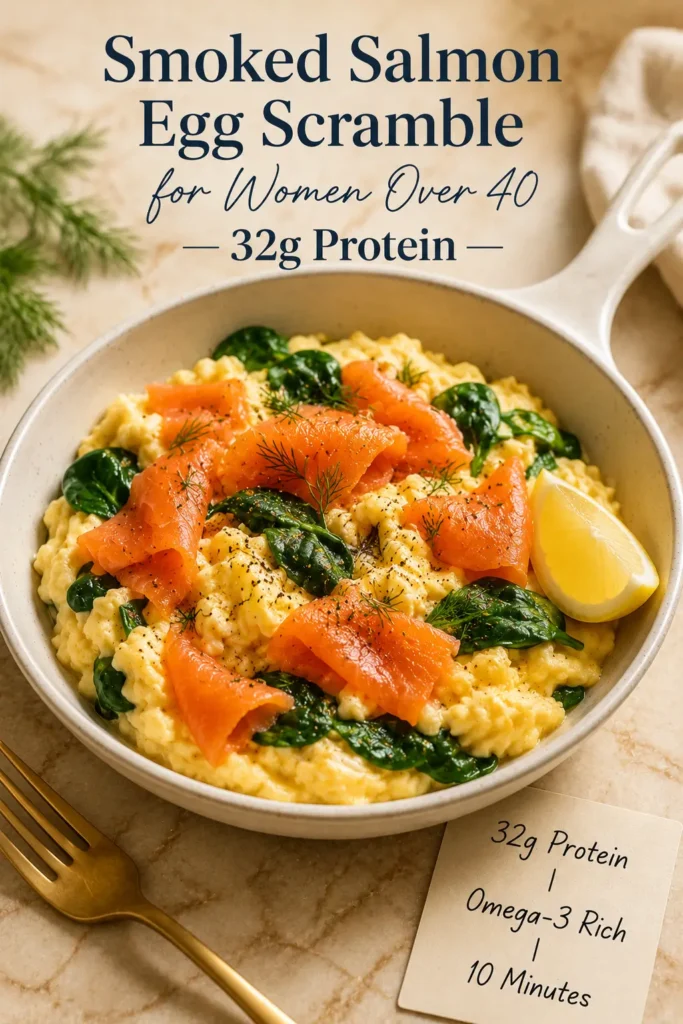
Protein: ~32–36g | Time: 10 minutes
This is one of the most nutrient-dense breakfasts you can eat after 40. Eggs and smoked salmon together are a powerhouse — packed with protein, omega-3 fatty acids for heart and brain health, and vitamin D which many women over 40 are low in.
What to use:
- 3 large eggs
- 2 oz smoked salmon, roughly torn
- A handful of baby spinach
- 1 tablespoon cream cheese
- Salt and pepper
How to make it:
- Whisk 3 eggs and cook slowly in a pan on low heat
- When eggs are almost done, stir in the cream cheese
- Remove from heat and top with smoked salmon and fresh spinach
The spinach wilts from the heat of the eggs — no extra cooking needed.
Why it works for over 40: Salmon is one of the richest natural sources of omega-3s, which reduce inflammation — something that increases naturally after menopause. Eggs provide leucine — the key amino acid for muscle building.
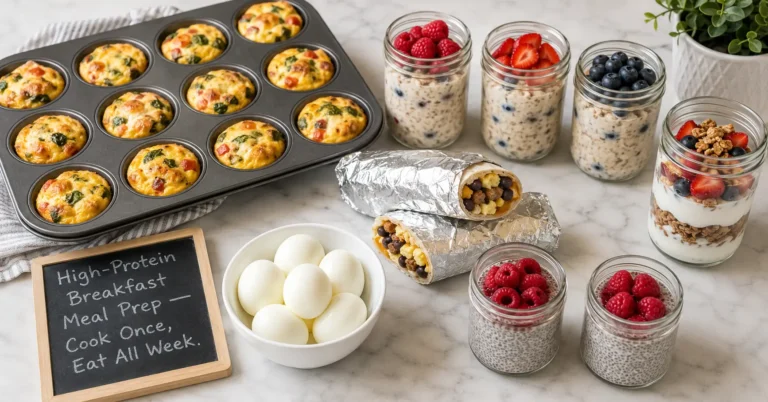
ey. Jar 4: chocolate with walnuts. Jar 5: cinnamon apple. Same base — totally different breakfast every day.
3. Cottage Cheese and Berry Protein Bowl
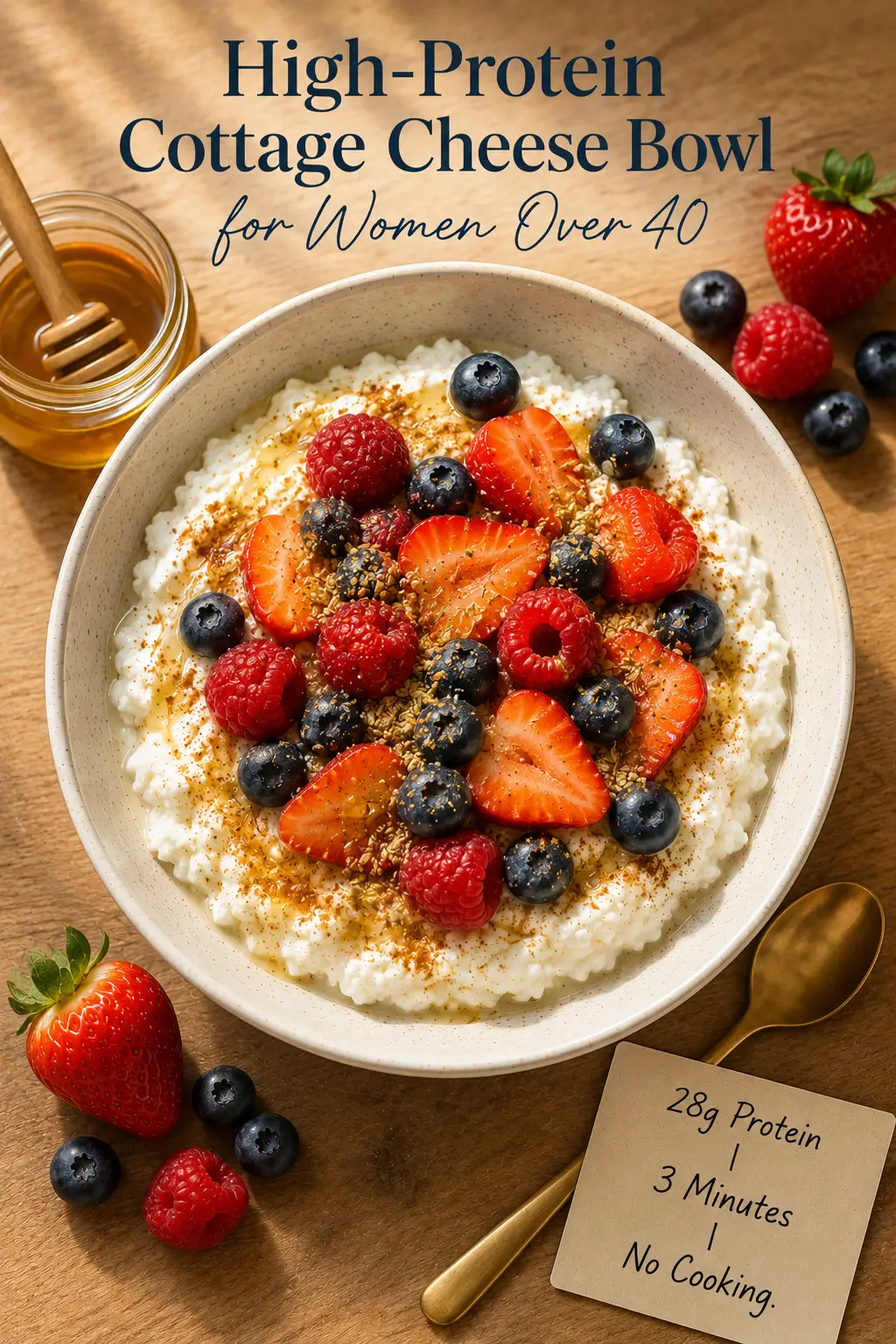
Protein: ~28–32g | Time: 3 minutes | No cooking
Cottage cheese is a secret weapon for women over 40. One cup gives you around 28 grams of casein protein — a slower-digesting protein that keeps your muscles fed for longer. It is also rich in calcium.
What to use:
- 1 cup cottage cheese (full fat or 2%)
- ½ cup mixed berries
- 1 tablespoon ground flaxseed
- A drizzle of honey
- A pinch of cinnamon
Mix together and eat. That is it.
Why it works for over 40: Casein protein (the type in cottage cheese) is digested slowly — keeping you full and keeping amino acids available to your muscles for longer. Ground flaxseed adds omega-3s and lignans, which may support hormone balance during menopause.
4. Tofu Scramble with Vegetables
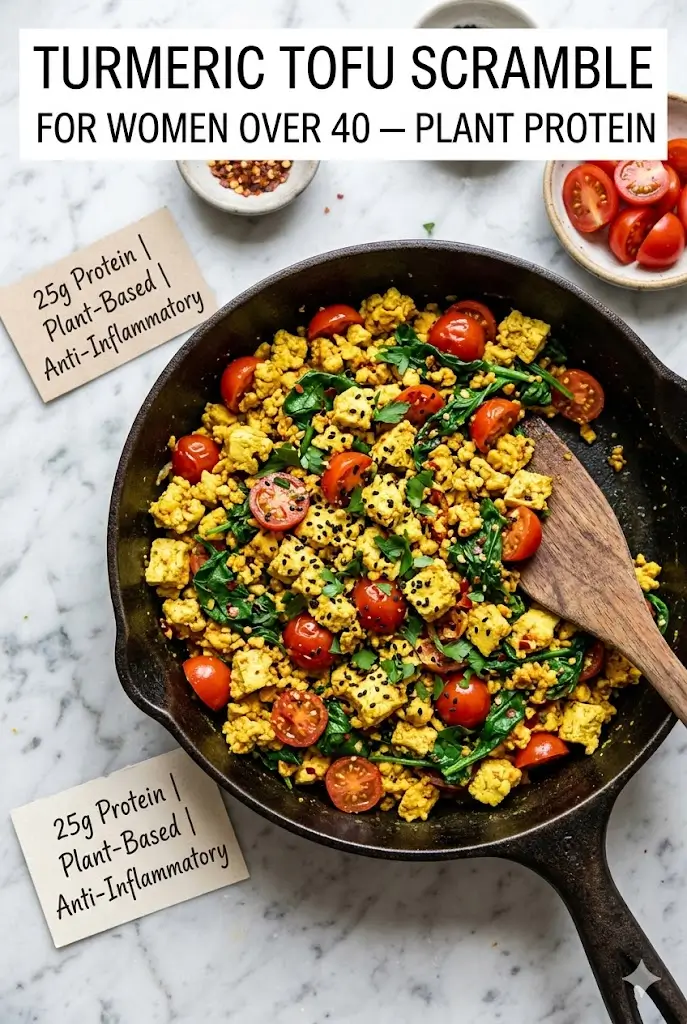
Protein: ~25–30g | Time: 12 minutes
For women over 40 who prefer plant-based protein — or who want to add more variety — tofu scramble is a brilliant option. Tofu is a complete protein and a good source of isoflavones, which some research suggests may help ease menopause symptoms.
What to use:
- ½ block firm tofu (pressed and crumbled)
- ½ cup cherry tomatoes, halved
- ½ cup baby spinach
- ¼ teaspoon turmeric
- ¼ teaspoon garlic powder
- Salt and pepper
- 1 tablespoon olive oil
How to make it:
- Heat oil in a pan. Add crumbled tofu
- Sprinkle turmeric and garlic powder over the tofu
- Cook for 5 minutes, stirring occasionally
- Add tomatoes and spinach. Cook 2 more minutes
- Season with salt and pepper. Serve hot
Why it works for over 40: Soy protein (found in tofu) is one of the only plant proteins that contains all essential amino acids. Turmeric adds anti-inflammatory benefits. Spinach adds iron, which many women in perimenopause need more of.
5. Whey Protein Smoothie with Spinach and Banana
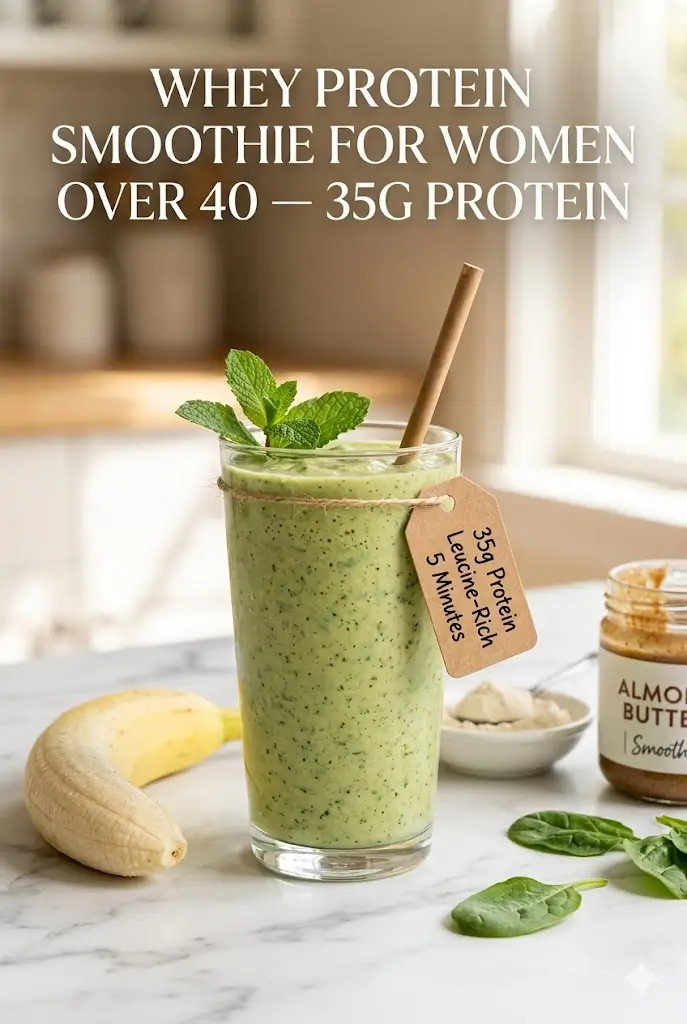
Protein: ~30–40g | Time: 5 minutes | No cooking
Whey protein is especially worth mentioning for women over 40. Whey protein is highly bioavailable and rich in leucine, making it an excellent addition to meals — and whey protein supplementation in postmenopausal women has shown benefits for muscle health.
What to use:
- 1–2 scoops whey protein powder (vanilla or unflavoured)
- 1 cup milk (dairy or fortified plant milk)
- 1 frozen banana
- 1 large handful of baby spinach
- 1 tablespoon almond butter
- A handful of ice
Blend for 30 seconds.
Why it works for over 40: Whey is the fastest-absorbing protein available and is especially rich in leucine. This is one of the most research-backed protein sources for maintaining muscle in women over 40. The milk adds extra calcium. Spinach adds iron and magnesium.
6. Baked Eggs in Avocado
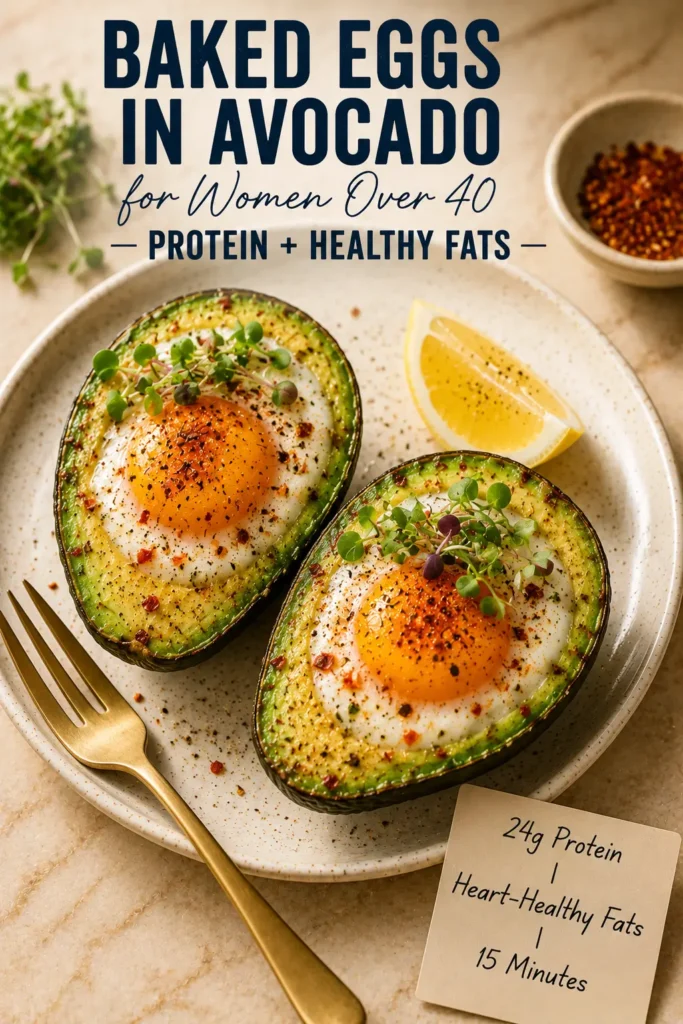
Protein: ~22–26g | Time: 15 minutes
This one looks impressive but is genuinely very easy. You bake eggs right inside avocado halves — and the result is a warm, creamy, deeply satisfying breakfast that is rich in protein and healthy fats.
What to use:
- 1 large ripe avocado, halved and pitted
- 2 large eggs
- Salt, pepper, and chili flakes
- A squeeze of lemon juice
How to make it:
- Preheat oven to 425°F (220°C)
- Place avocado halves in a small baking dish. Scoop out a little extra avocado from the centre so the egg fits
- Crack one egg into each avocado half
- Sprinkle salt, pepper, and chili flakes
- Bake for 12–15 minutes until egg whites are set but yolk is still slightly soft
- Finish with a squeeze of lemon
Why it works for over 40: Avocado is packed with heart-healthy monounsaturated fats, potassium, and folate. Eggs add complete protein with leucine. This is a naturally anti-inflammatory breakfast — important for women managing midlife joint stiffness or inflammation.
7. Overnight Oats with Protein Powder and Chia Seeds
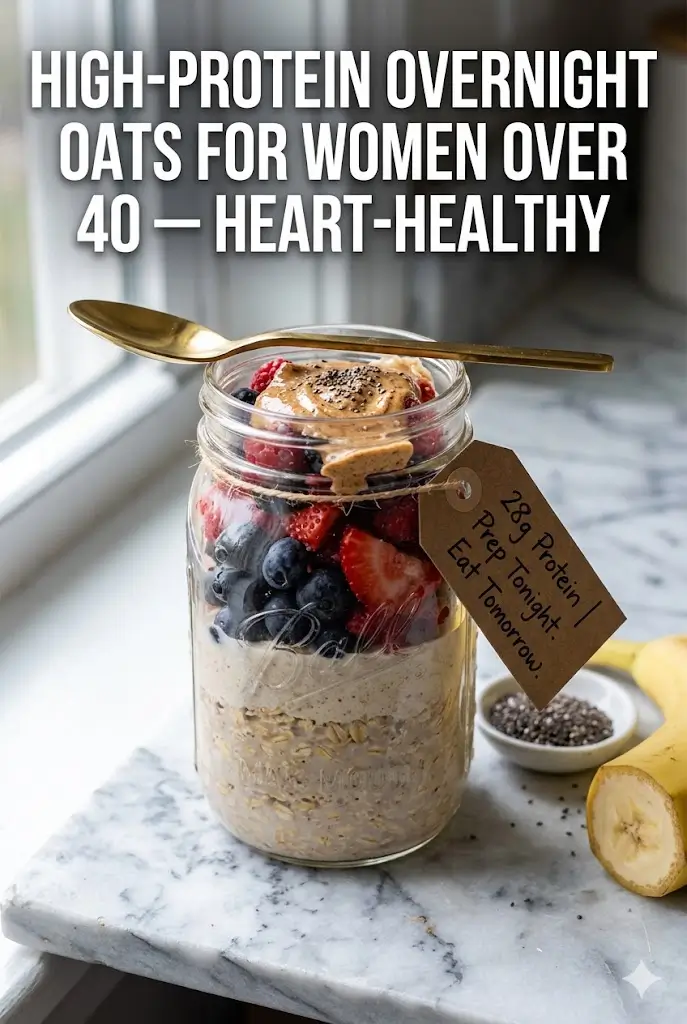
Protein: ~28–32g | Time: 5 minutes prep the night before
Overnight oats are a classic — but the version below is specifically designed for women over 40 with extra protein from protein powder and extra omega-3s from chia seeds.
What to use (per jar):
- ½ cup rolled oats
- 1 cup milk (dairy or fortified oat/soy milk)
- 1 scoop protein powder
- 1 tablespoon chia seeds
- 1 tablespoon almond butter
- A handful of berries on top in the morning
Mix in a jar. Refrigerate overnight. Add berries in the morning and eat.
Why it works for over 40: Oats contain beta-glucan, a type of soluble fibre that supports heart health — important as cardiovascular risk increases after menopause. The protein powder brings the total protein to 28–32 grams. Chia seeds add omega-3s, calcium, and extra fibre.
8. Egg and Turkey Sausage Breakfast Bowl
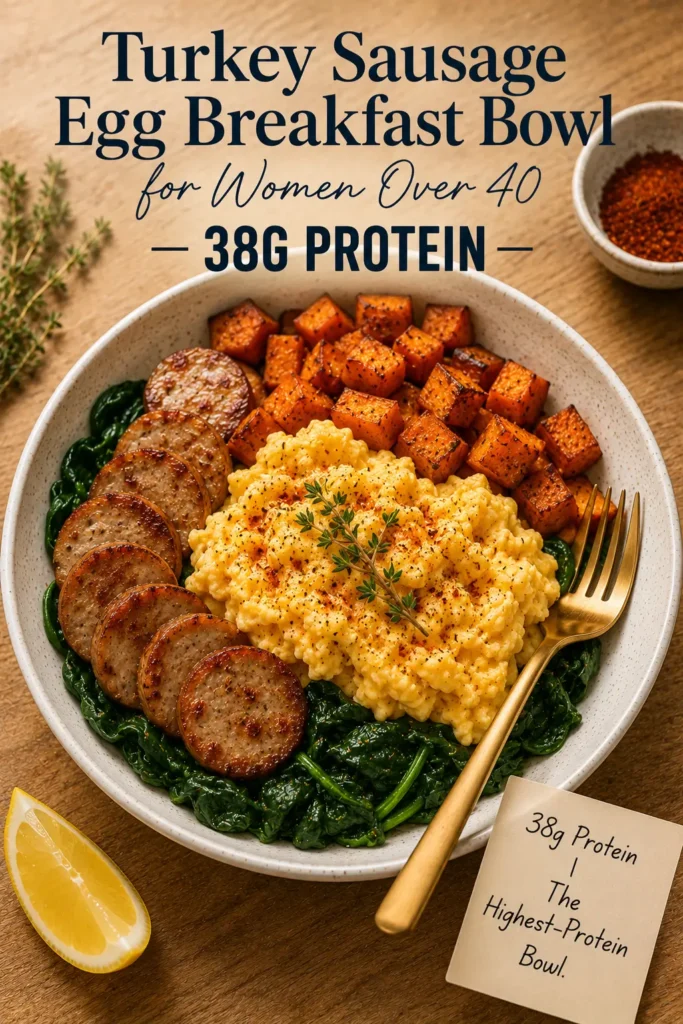
Protein: ~35–40g | Time: 12 minutes
This is a warm, filling, savory breakfast that packs an enormous amount of protein. Turkey sausage is lean, lower in saturated fat than pork sausage, and very high in protein. Pair it with eggs and you have one of the highest-protein breakfasts on this list.
What to use:
- 3 large eggs
- 2 turkey sausage links, sliced
- ½ cup roasted sweet potato (can use leftovers or pre-cooked)
- A handful of baby spinach
- Salt, pepper, smoked paprika
How to make it:
- Cook sliced turkey sausage in a pan until browned
- Add sweet potato and spinach to the pan. Stir 2 minutes
- Push everything to the side. Scramble or fry eggs in the same pan
- Season with salt, pepper, and smoked paprika
Why it works for over 40: Sweet potato adds slow-release carbohydrates, fibre, and potassium. Turkey sausage is a lean, high-protein choice. The combination of eggs and turkey provides a full spectrum of essential amino acids — ideal for muscle maintenance after 40.
9. Salmon and Cream Cheese on Whole Grain Toast
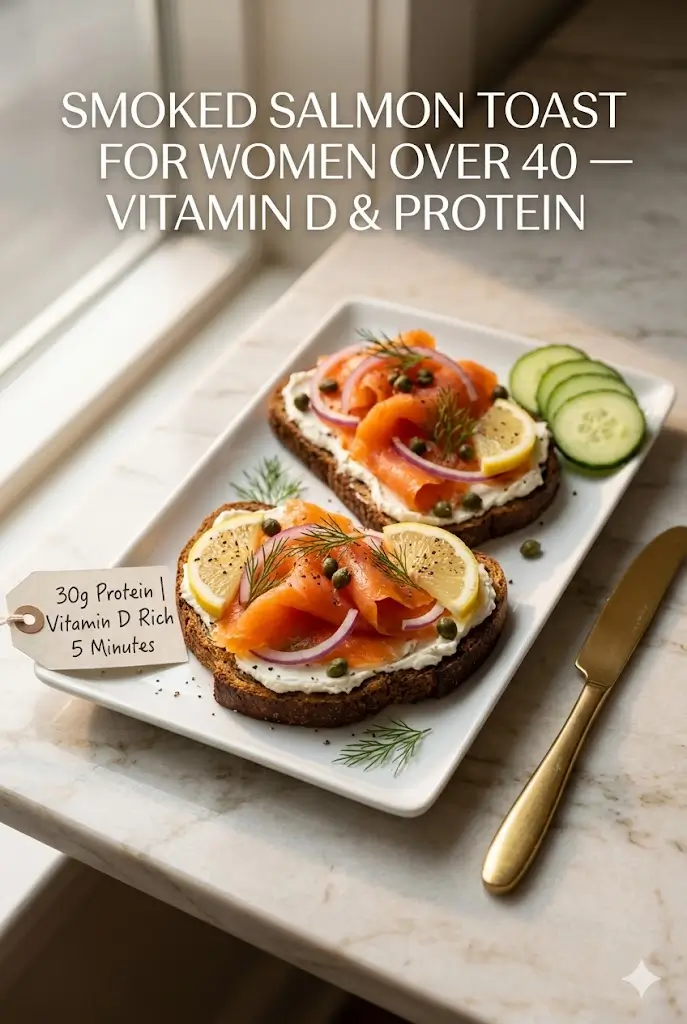
Protein: ~28–32g | Time: 5 minutes | Minimal cooking
Simple, fast, and incredibly nourishing. This is one of the most omega-3-rich breakfasts on this list — and omega-3s are especially important for women over 40 for heart health, brain health, and reducing inflammation.
What to use:
- 2 slices whole grain or rye bread, toasted
- 3 oz smoked salmon
- 2 tablespoons cream cheese
- Capers, fresh dill, and a squeeze of lemon
- Sliced cucumber on the side
Spread cream cheese on toast. Layer salmon on top. Add capers, dill, and lemon. Done.
Why it works for over 40: Salmon is one of the richest food sources of vitamin D — a nutrient critical for bone health and immune function that becomes increasingly important after 40. Combined with whole grain bread for fibre and steady energy, this is a genuinely well-rounded breakfast.
10. Quinoa Breakfast Bowl with Boiled Eggs
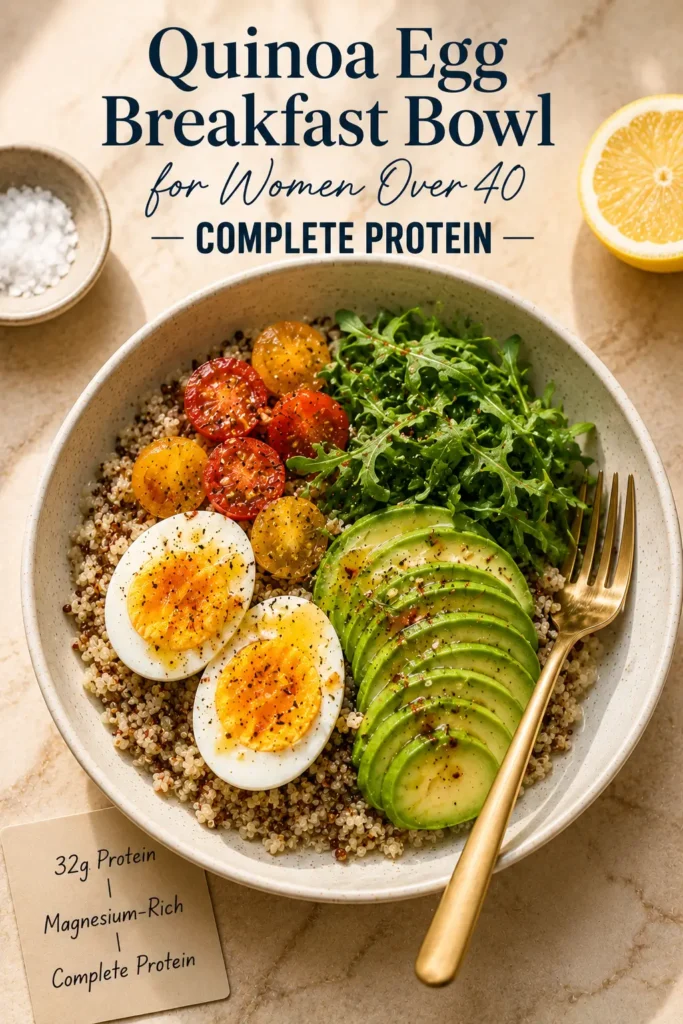
Protein: ~30–35g | Time: 5 minutes (with pre-cooked quinoa)
Quinoa is one of the only plant foods that is a complete protein on its own — meaning it has all nine essential amino acids. Combined with boiled eggs, this creates a very satisfying, unique breakfast that many women over 40 find works beautifully for their digestion.
What to use:
- ½ cup cooked quinoa (warm it up from the night before)
- 2 hard-boiled eggs
- ½ avocado, sliced
- A handful of cherry tomatoes, halved
- Olive oil, lemon juice, salt and pepper
How to make it:
- Warm quinoa in the microwave for 60 seconds
- Top with sliced avocado and halved tomatoes
- Slice hard-boiled eggs and place on top
- Drizzle olive oil and lemon juice over everything
- Season with salt and pepper
Why it works for over 40: Quinoa is also high in magnesium — a mineral that many women are deficient in, especially during perimenopause. Magnesium supports sleep, reduces muscle cramps, and helps regulate blood pressure. This bowl covers protein, healthy fats, and micronutrients in one simple dish.
Your Quick Comparison Table
| # | Breakfast | Protein | Time | Key Benefit for Over 40 |
|---|---|---|---|---|
| 1 | Greek Yogurt Bowl | 30–35g | 5 min | Bone health + probiotics |
| 2 | Smoked Salmon Egg Scramble | 32–36g | 10 min | Omega-3s + vitamin D |
| 3 | Cottage Cheese Berry Bowl | 28–32g | 3 min | Slow-release casein protein |
| 4 | Tofu Scramble | 25–30g | 12 min | Plant protein + anti-inflammatory |
| 5 | Whey Protein Smoothie | 30–40g | 5 min | Leucine-rich + fast absorbing |
| 6 | Baked Eggs in Avocado | 22–26g | 15 min | Healthy fats + anti-inflammatory |
| 7 | Overnight Oats + Protein | 28–32g | 5 min (night before) | Heart health + omega-3s |
| 8 | Egg + Turkey Sausage Bowl | 35–40g | 12 min | Highest protein + iron |
| 9 | Salmon Toast | 28–32g | 5 min | Vitamin D + bone support |
| 10 | Quinoa Egg Bowl | 30–35g | 5 min (with prep) | Magnesium + complete protein |
Foods to Avoid at Breakfast After 40
Just as important as what you eat is what you try to limit in the morning.
Sugary cereals and pastries: These spike blood sugar quickly and crash it just as fast — leaving you tired, hungry, and craving more sugar by mid-morning. Blood sugar instability gets harder to manage after 40 as insulin sensitivity decreases.
Flavoured yogurts with lots of added sugar: They look healthy but many contain as much sugar as a dessert. Always check the label. Look for plain yogurt and add your own fruit.
Fruit juice: Even 100% fruit juice is essentially sugar water. The fibre has been removed, so it acts just like soda in your blood stream. Eat the whole fruit instead.
Highly processed breakfast meats: Bacon and regular pork sausage are high in saturated fat and sodium — not ideal for the heart health focus that becomes more important after menopause. Swap for turkey sausage or smoked salmon.
Toast and jam alone: There is almost no protein in this classic breakfast. If you love toast, add eggs, smoked salmon, cottage cheese, or peanut butter on top.
A Simple Morning Routine for Women Over 40
You do not need to change everything at once. Here is a gentle five-day plan to ease into higher-protein mornings:
Monday: Greek Yogurt Bowl with walnuts and berries (Recipe 1)
Tuesday: Whey Protein Smoothie — make it the night before and store in the fridge (Recipe 5)
Wednesday: Smoked Salmon and Egg Scramble (Recipe 2)
Thursday: Overnight oats — made Tuesday night (Recipe 7)
Friday: Cottage Cheese and Berry Bowl (Recipe 3)
Five days. Five different breakfasts. All between 28 and 40 grams of protein. See how you feel by Friday afternoon. Most women notice a real difference in their energy and hunger levels within just a few days of eating this way.
(cold) is the perfect starter combination.
Final Thoughts
After 40, your body needs more protein. Not less. More.
And the morning is the most important time to get it — because it sets your blood sugar, your energy, your hunger hormones, and your muscle-building signals for the entire rest of the day.
The 10 breakfasts in this article are not just healthy. They are specifically designed to give your body what it needs at this stage of life — more complete protein, more leucine, more anti-inflammatory omega-3s, more calcium and vitamin D for your bones.
You do not need to do all 10 at once. Pick two or three that sound good to you. Try them this week. Notice how you feel.
More energy. Better focus. Fewer cravings. Steadier mood. That is what your body feels like when it is getting the nutrition it actually needs.
And it starts at breakfast.
What to Read Next
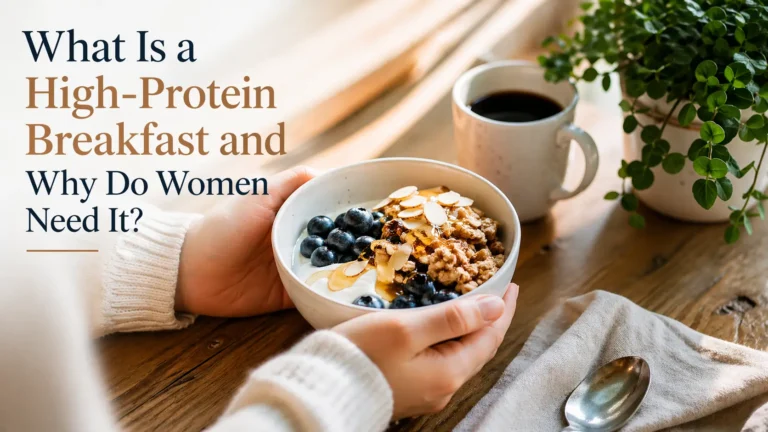
- What Is a High-Protein Breakfast and Why Do Women Need It?
- 15 High-Protein Breakfast Ideas for Women Trying to Lose Weight
- 15 Easy High-Protein Breakfast Ideas for Busy Women (No Cooking Skills Needed!)
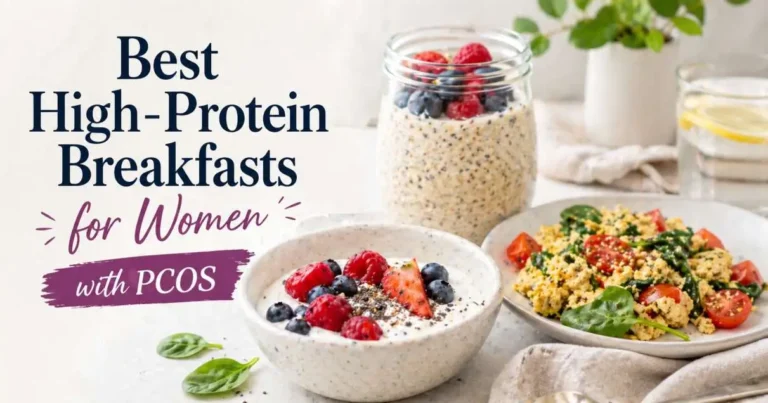
- Best High-Protein Breakfasts for Women with PCOS
- High-Protein Breakfasts That Help Balance Hormones Naturally
Remember: This article is for educational purposes only. The information here is based on publicly available research and is meant to help you learn — not to replace advice from a doctor or dietitian. Always speak with a healthcare professional before making major changes to your diet.