
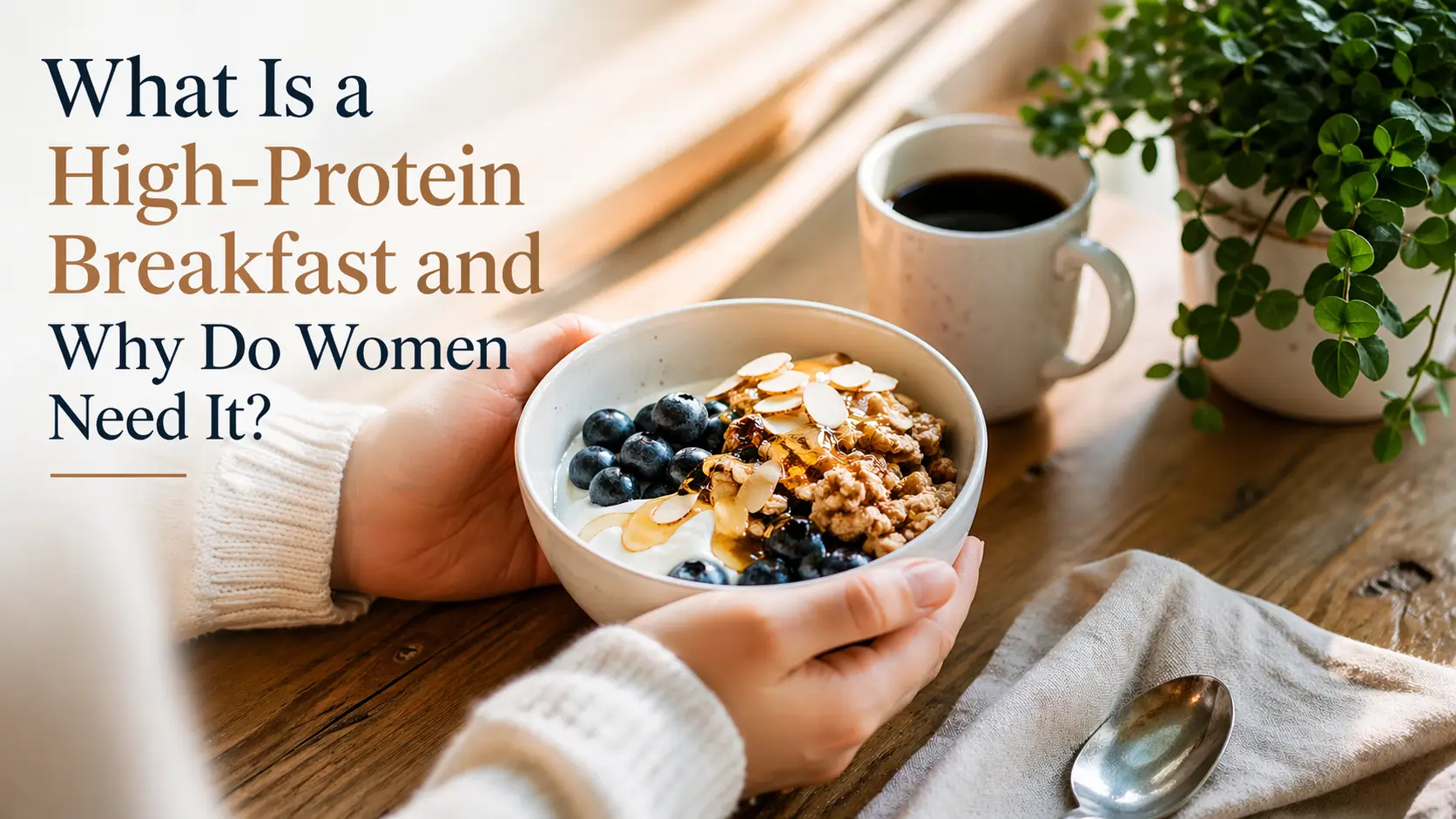
What Is a High-Protein Breakfast and Why Do Women Need It?
You wake up. You’re rushing. You grab a piece of toast, maybe a banana, and run out the door.
Sound familiar?
Most women do exactly this. And then — right around 10:30 AM — it hits. That tired, hungry, foggy feeling. You can’t focus. You want something sweet. Your energy just… disappears.
Here’s the thing. That crash? It’s not random. It’s what happens when your morning meal doesn’t have enough protein.
In this article, you’ll learn — in plain, simple words — what a high-protein breakfast actually is, why your body needs it, and why women in particular benefit so much from starting the day with protein. No complicated science talk. No diet jargon. Just clear, honest information that can help you feel better every single morning.
What Is Protein, Anyway?
Before we talk about breakfast, let’s talk about protein itself — because a lot of people don’t really know what it is.
Protein is one of the three main things your body needs from food. (The other two are carbs and fats.) Think of protein as tiny building blocks. Your body uses these building blocks to:
- Build and fix your muscles
- Make your hair and nails grow
- Help your skin stay healthy
- Keep your hormones working right
- Give your body energy that lasts
You can find protein in foods like eggs, chicken, fish, Greek yogurt, cottage cheese, beans, tofu, and nuts.
Every single cell in your body has protein in it. That’s how important it is.
So, What Is a High-Protein Breakfast?
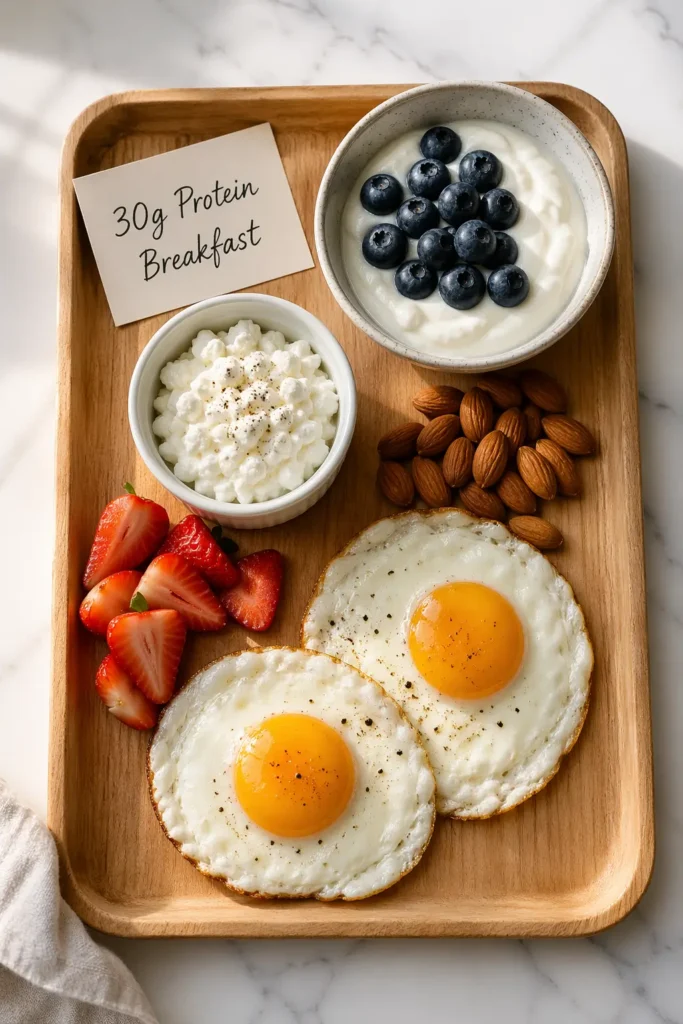
A high-protein breakfast is simply a morning meal that gives your body a good amount of protein — at least 25 to 30 grams — right when you start your day.
To give you an idea of what that looks like:
| Food | How Much Protein |
|---|---|
| 2 large eggs | ~12 grams |
| 1 cup Greek yogurt | ~17–20 grams |
| ½ cup cottage cheese | ~14 grams |
| 1 scoop protein powder | ~20–25 grams |
| 2 oz smoked salmon | ~13 grams |
So a breakfast of two eggs + a cup of Greek yogurt would already give you around 30 grams of protein. That’s it. Nothing extreme. Nothing fancy.
How Much Protein Do Women Need in the Morning?
Most nutrition researchers today suggest that women aim for 25 to 30 grams of protein at breakfast — and some say even more is better.
Here’s why this number matters:
Your body can only use so much protein at one time. When you eat protein spread throughout the day — including a solid amount at breakfast — your body uses it more efficiently. Research has found that women who eat protein evenly across all three meals (instead of saving most of it for dinner) saw better results for muscle health, energy, and weight management.
Most American women eat very little protein at breakfast — often less than 10 grams. Then they eat a lot at dinner. But by that point? Your body can’t fully use all of it. The extra just gets stored as fat.
So yes — morning protein matters. A lot.
What Happens Inside Your Body When You Eat a High-Protein Breakfast?
Let’s break this down step by step — in simple words.
Step 1: Your blood sugar stays calm
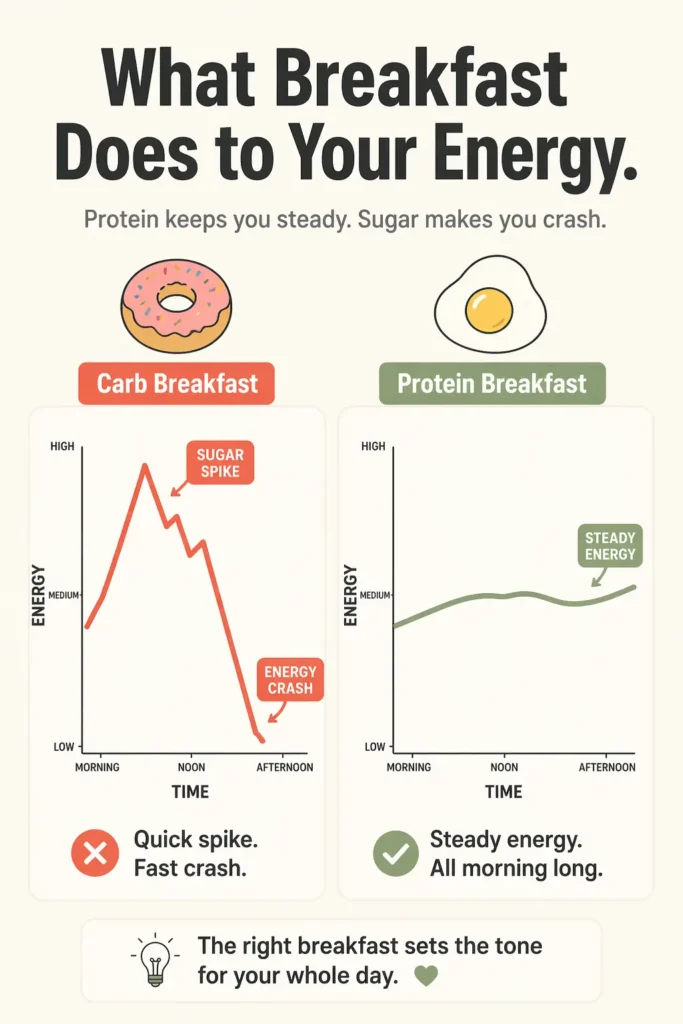
When you eat carbs alone (like toast or cereal), your blood sugar shoots up fast. Then it crashes. That crash is what makes you feel tired and hungry again by mid-morning.
Protein slows all of that down. It slows how fast your body absorbs carbs. So your blood sugar rises slowly and stays steady. No big spike. No big crash.
Research on women showed that those who ate a protein-rich breakfast had much lower blood sugar spikes compared to women who ate a low-protein, carb-heavy breakfast. That steadiness lasted for hours.
Step 2: You feel full longer
Protein tells your brain: “We’re good. We don’t need more food right now.”
It does this by lowering a hormone called ghrelin (your hunger hormone) and raising hormones that tell you you’re full. This means you’re less likely to reach for snacks at 10 AM or overeat at lunch.
One study found that women who increased protein in their diet naturally ate about 441 fewer calories per day — without even trying.
Step 3: Your muscles get what they need
Every morning when you wake up, you’ve gone hours without food. Your muscles are waiting for nutrients. When you give them protein early in the day, they can start rebuilding and staying strong.
This matters at any age — but especially as women get older, because muscle naturally starts to decrease in your 30s and 40s. Eating enough protein helps slow that process down.
Step 4: Your brain works better
Protein helps your body make certain chemicals in the brain — like dopamine and serotonin — that affect your mood, focus, and energy. A protein-rich breakfast can help you feel more alert and less foggy in the morning.
Why Do Women Specifically Need High-Protein Breakfasts?
Good question. Both men and women benefit from protein. But women have some specific reasons why breakfast protein is extra important.
1. Hormones
Women’s bodies go through hormone changes every month — and then bigger changes during pregnancy, after having a baby, and during menopause. Protein is involved in making and balancing hormones. When you don’t eat enough protein, your hormones can get out of balance.
Studies have also shown that women who regularly skip breakfast tend to have higher levels of cortisol — that’s your stress hormone. High cortisol over time is linked to weight gain, poor sleep, and mood problems.
2. PCOS (Polycystic Ovary Syndrome)
PCOS is a common condition that affects up to 1 in 10 women in the US. It causes hormonal problems, irregular periods, and makes it hard for the body to manage blood sugar well. A high-protein breakfast helps keep blood sugar steady — which is one of the most important things for women with PCOS.
3. Bone Health
Women are more likely than men to develop weak bones (called osteoporosis) as they age. Protein helps protect bone density. Eating enough protein every day — starting with breakfast — is a small but powerful habit for long-term bone health.
4. Weight and Metabolism
Women’s bodies naturally have more fat and less muscle than men’s. Muscle helps burn more calories, even when you’re resting. Protein helps build and keep that muscle. So a high-protein breakfast supports a healthy weight not by starving you — but by keeping your body’s engine running well.
5. Energy That Actually Lasts
Many women say they feel tired all the time. One big reason? Not enough protein at the start of the day. When your morning meal is mostly carbs and sugar, you get a quick burst of energy — and then a big crash. Protein gives you steady, lasting energy instead.
What Happens When You DON’T Eat Enough Morning Protein?
Let’s paint a real picture here.
You eat toast with jam for breakfast. Or a bowl of sugary cereal. Or nothing at all.
By 10 AM, you’re hungry again. You feel shaky or cranky. You grab a cookie or a muffin from the break room. By lunchtime, you’re starving and end up eating way more than you planned. By 3 PM, you’re exhausted and reaching for coffee or something sweet just to get through the afternoon.
Sound like a lot of women’s days? Yes. Because it is.
Here’s what’s actually happening:
- Without protein, blood sugar spikes and crashes
- Your hunger hormone goes up — making you feel hungrier than you actually are
- Your brain gets foggy and tired
- Your body starts looking for quick energy from sugar
- You end up eating more through the day
The crazy thing is: the fix is simple. Add protein to your breakfast. That’s it. Everything else starts to shift.
What Does a High-Protein Breakfast Actually Look Like?
You don’t need to be a chef. You don’t need fancy equipment. Here are some real, simple examples:
Option 1 — The Classic (Easy) Two scrambled eggs + a cup of Greek yogurt = ~30 grams of protein
Option 2 — The Grab-and-Go Cottage cheese bowl with berries and a handful of nuts = ~20–25 grams of protein
Option 3 — The Smoothie Protein powder + almond milk + banana + peanut butter = ~25 grams of protein
Option 4 — The Savory Lover Avocado toast on whole grain bread + two eggs on top = ~22 grams of protein
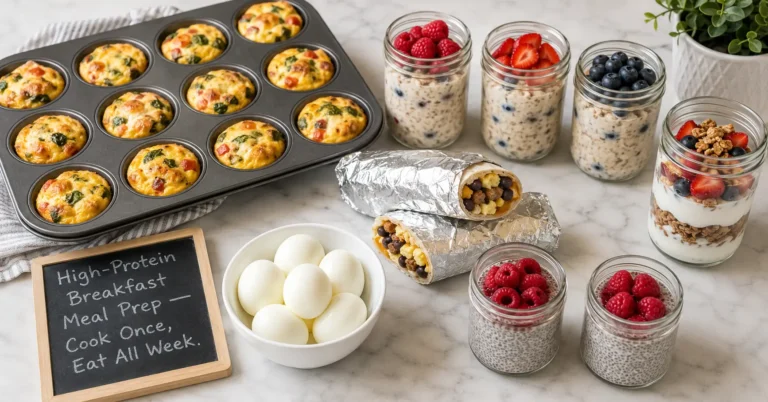
Option 5 — The Make-Ahead Egg muffins (made on Sunday, eaten all week) + Greek yogurt = ~28 grams of protein
These are all normal, everyday foods. No strange powders required (though protein powder can help if needed). No expensive grocery store trips. Just real food, planned a little better.
Common Breakfast Mistakes Most Women Make
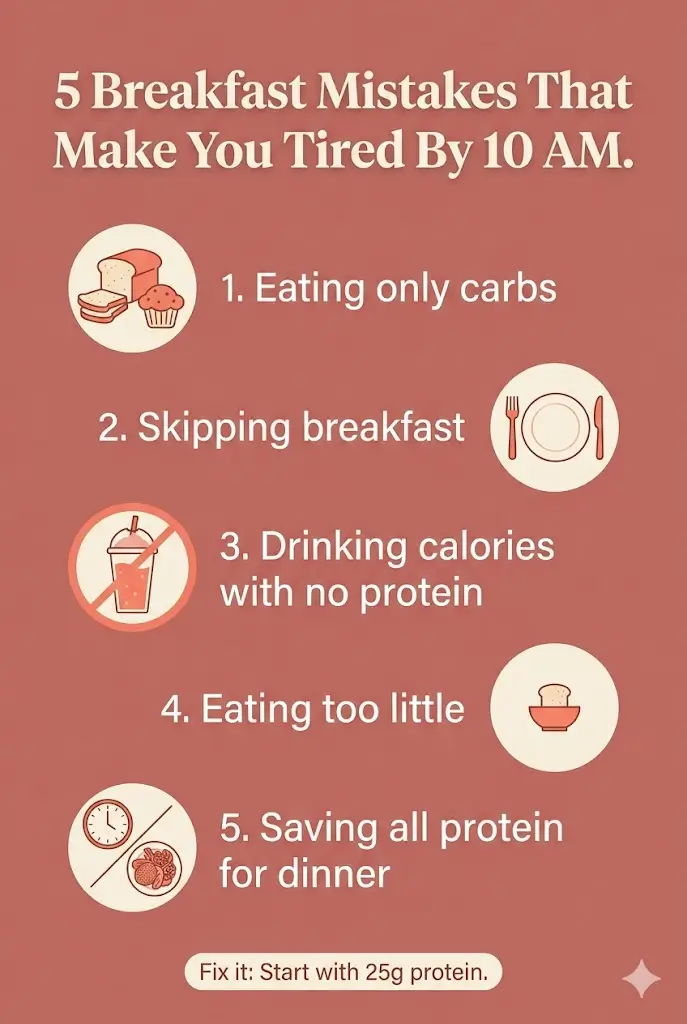
Knowing what not to do is just as helpful. Here are the most common breakfast habits that leave women feeling tired and hungry by mid-morning:
Mistake #1: Eating only carbs Cereal, toast, bagels, muffins, pancakes — these foods are mostly carbs and sugar. They give you quick energy that disappears fast. Fix: Add a protein source alongside them.
Mistake #2: Skipping breakfast entirely “I’m not hungry in the morning” is something a lot of women say. But skipping breakfast raises your stress hormone levels and often leads to overeating later in the day. Fix: Even a small, protein-rich snack in the morning is better than nothing.
Mistake #3: Drinking calories without protein Coffee with flavored creamer, fruit juice, or a smoothie made mostly from fruit — these might feel like breakfast, but they give you very little protein. Fix: Add protein powder to your smoothie, or pair your coffee with eggs or yogurt.
Mistake #4: Eating too little Some women try to eat as little as possible in the morning to “save calories.” But this usually backfires — leading to cravings and overeating later. Fix: A filling, protein-rich breakfast actually helps you eat less overall through the day.
Mistake #5: Saving all your protein for dinner Your body can’t store leftover protein from dinner and use it in the morning. It needs protein throughout the day — especially at that first meal. Fix: Aim to spread your protein across all three meals.
Best Protein Foods for Women’s Breakfasts
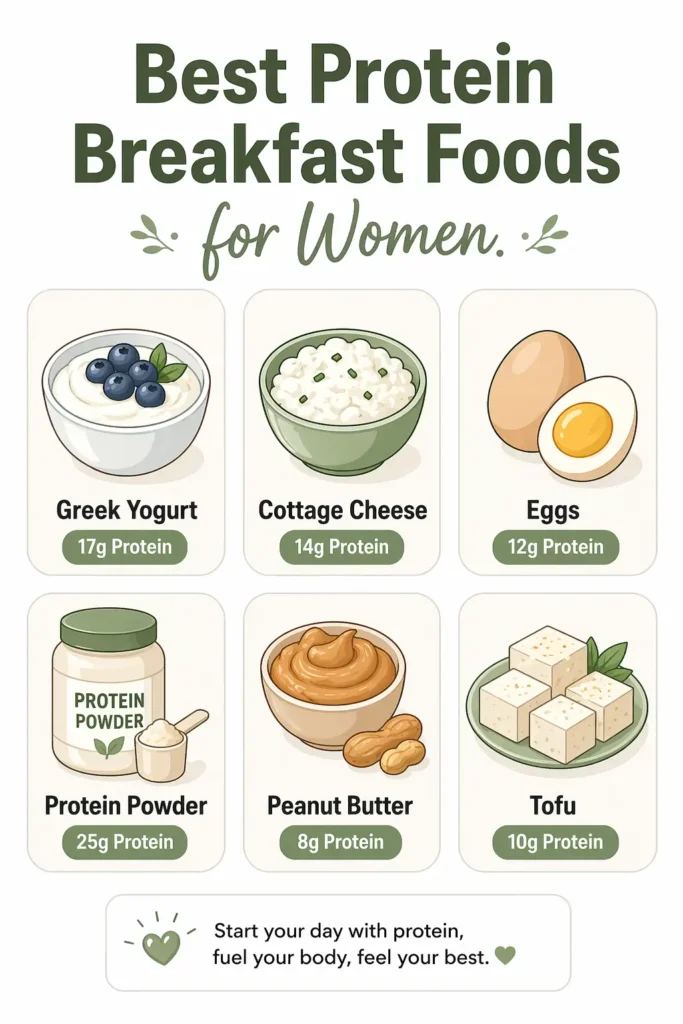
Here’s a quick guide to the best protein-rich foods you can add to your morning:
Animal-Based (Higher Protein Per Serving):
- Eggs — easy, versatile, great for cooking
- Greek yogurt — creamy and great with fruit
- Cottage cheese — mild flavor, very high in protein
- Smoked salmon — great on toast or with eggs
- Turkey or chicken sausage — good for savory breakfasts
Plant-Based (Great for Vegans and Vegetarians):
- Tofu — scrambles just like eggs
- Edamame — great as a side or mixed into a bowl
- Chia seeds — add to yogurt or oats for extra protein
- Peanut butter or almond butter — pair with whole grain toast
Tip: Try to mix two protein sources at breakfast. For example: eggs AND yogurt. Or oats AND protein powder. This helps you hit that 25–30 gram goal more easily.
A Simple Morning Routine to Try This Week
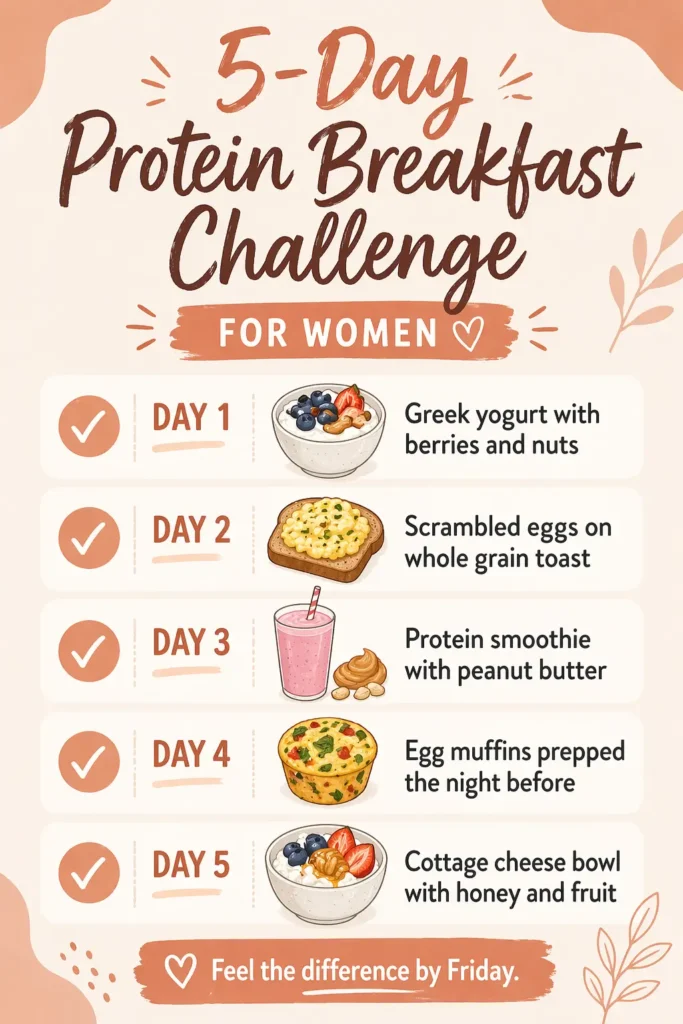
You don’t need to overhaul your whole life to start eating more protein in the morning. Here’s a simple plan to try this week:
Day 1: Swap your cereal for Greek yogurt with nuts and berries.
Day 2: Make scrambled eggs instead of toast. (Keep the toast — just add eggs on top.)
Day 3: Try a protein smoothie with protein powder, almond milk, a banana, and a spoon of peanut butter.
Day 4: Make egg muffins the night before (just whisk eggs, pour into a muffin pan, add your favorite veggies, bake, done).
Day 5: Cottage cheese bowl with fruit and a drizzle of honey.
Just five days. See how different you feel by Friday.
Frequently Asked Questions
The Bottom Line
Here’s what it all comes down to:
Your morning meal sets the tone for your whole day.
When you start with protein — real, filling protein — your blood sugar stays steady. Your hunger stays low. Your energy lasts. Your muscles stay strong. And your hormones have what they need to work properly.
It doesn’t have to be complicated. You don’t need a special diet plan or expensive supplements. You just need to swap out the cereal or the toast-only breakfast for something that actually has protein in it.
Even one small change — like adding Greek yogurt to your morning — can make a real difference in how you feel.
And that feeling? Steady energy, no mid-morning crash, fewer cravings? That’s not a diet trick. That’s just what your body feels like when it gets what it needs.
Looking for specific ideas? Here are the next articles in this series:
- 15 Easy High-Protein Breakfast Ideas for Busy Women
- High-Protein Breakfasts for Women Trying to Lose Weight
- Best High-Protein Breakfasts for Women with PCOS
- High-Protein Breakfast Ideas for Women Over 40
Remember: This article is for educational purposes only. The information here is based on publicly available research and is meant to help you learn — not to replace advice from a doctor or dietitian. Always speak with a healthcare professional before making major changes to your diet.