

7-Day Gut Reset Plan for Beginners: Your Step-by-Step Guide to a Healthier Digestive System

A gut reset plan for beginners is a structured 7-day approach that eliminates inflammatory foods, reintroduces healing nutrients, and supports your microbiome through diet, hydration, and lifestyle habits. Most people notice reduced bloating, better energy, and improved digestion within the first week.
That said, your gut is doing a lot more than just processing your lunch. It houses approximately 38 trillion microbial cells, influences your mood, regulates about 70% of your immune system, and even affects how clearly you think. When things go sideways in there — bloating, fatigue, brain fog, erratic digestion — your whole day suffers.
The good news? You don’t need a month-long protocol or an expensive program to start feeling better. Seven focused days can meaningfully shift how your gut functions. This guide breaks the process down into daily steps you can actually follow without turning your life upside down
How Do You Know Your Gut Needs a Reset?
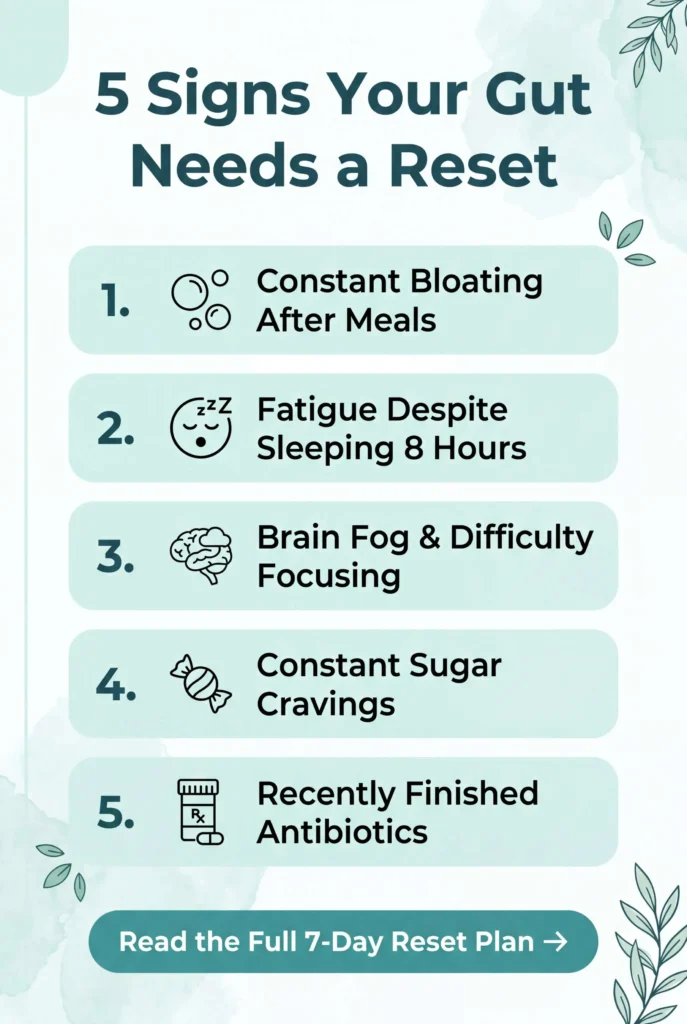
Your body is usually pretty clear when your digestive system is struggling — you just have to know what to listen for.
Common signs include persistent bloating (especially after meals), irregular bowel movements, constant fatigue despite getting enough sleep, skin breakouts, sugar cravings that won’t quit, and that annoying mental fog that makes it hard to focus. If you’ve recently finished a course of antibiotics, eaten a stretch of processed foods, or been under unusual stress, those are also solid reasons to give your gut some intentional care.
According to research published by UT Physicians, many people live with low-grade digestive complaints — heartburn, constipation, acid reflux — for years before addressing the root cause. A reset isn’t about diagnosing a disease. It’s about giving your system the breathing room to function the way it was designed to.
What to Eat (and What to Drop) Before You Start
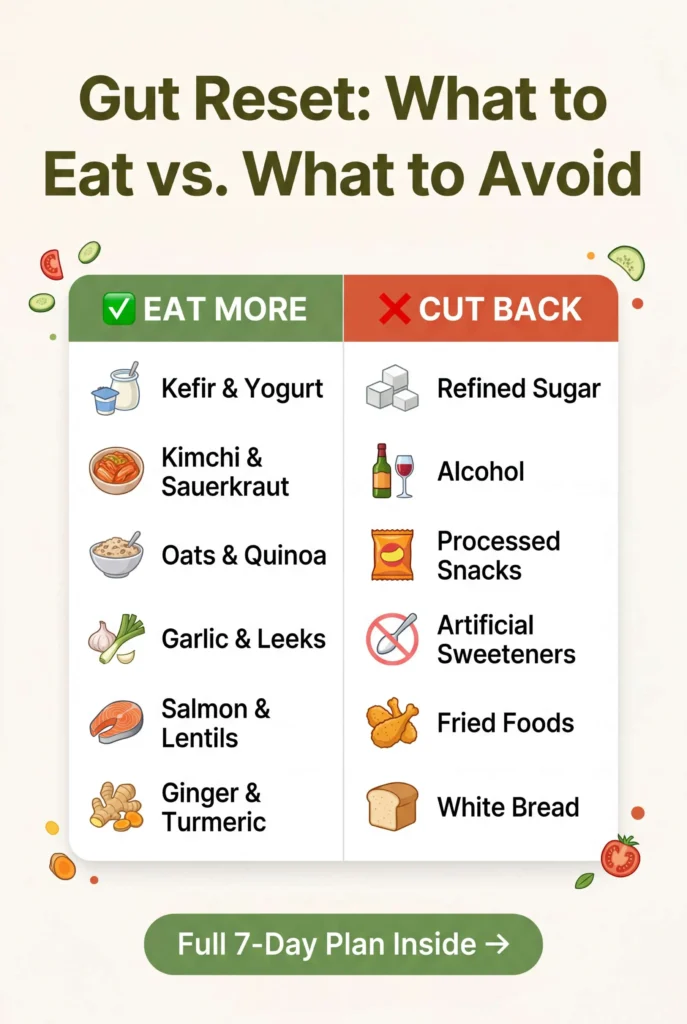
Understanding which foods help and which hurt is the foundation of any successful gut health reset.
Eat More of:
Fermented foods (kimchi, kefir, sauerkraut, plain yogurt with live cultures), prebiotic-rich vegetables (garlic, leeks, onions, asparagus, green bananas), fiber-heavy whole grains (oats, quinoa, brown rice), omega-3 proteins (salmon, mackerel, walnuts), and anti-inflammatory herbs like ginger and turmeric.
Cut back on
Refined sugar, alcohol, fried and processed foods, artificial sweeteners, and excessive red meat. These items disrupt the diversity of your gut bacteria and feed the strains you don’t want thriving.
| Category | Eat More | Cut Back |
|---|---|---|
| Grains | Oats, quinoa, brown rice | White bread, refined pasta |
| Proteins | Salmon, lentils, eggs | Processed deli meats, fried chicken |
| Dairy | Kefir, live-culture yogurt | Sugary flavored yogurt, heavy cream |
| Vegetables | Garlic, leeks, asparagus, leafy greens | None — all veggies welcome |
| Drinks | Water, herbal tea, bone broth | Alcohol, soda, diet drinks |
| Sweeteners | Raw honey (small amounts) | Artificial sweeteners, refined sugar |
Aim for at least 30 grams of fiber per day during the reset — research consistently points to this threshold as meaningful for microbiome diversity.
Day 1: Eliminate and Simplify
Day 1 is about clearing the deck — removing gut disruptors so your system can stop playing defense.
Start the morning with a large glass of warm water. Keep meals simple: steamed vegetables, a clean protein (poached eggs, grilled chicken, or lentil soup), and a small amount of whole grains. No alcohol, no processed snacks, no sugary drinks.
This isn’t punishment. Think of it as giving your gut a quiet day after a loud week. When you stop sending in the inflammatory signals, the healing process can actually begin. Most people feel a little sluggish on Day 1 — that’s completely normal. Your body is adjusting.
Day 2: Hydrate, Soothe, and Support the Gut Lining
On Day 2, the focus shifts to deep hydration and soothing the gut lining with gentle, healing foods.
Add herbal teas — peppermint, ginger, or chamomile work well. Bone broth or a plant-based vegetable broth is excellent here too; both contain compounds that support the mucosal lining of the digestive tract. A tablespoon of apple cider vinegar diluted in a large glass of water before meals can help stimulate digestive enzymes.
Keep meals light and warm. Think miso soup, steamed greens with olive oil, soft-cooked grains. Your gut responds well to warmth when it’s been under stress.
Day 3: Rebuild with Probiotic-Rich Foods
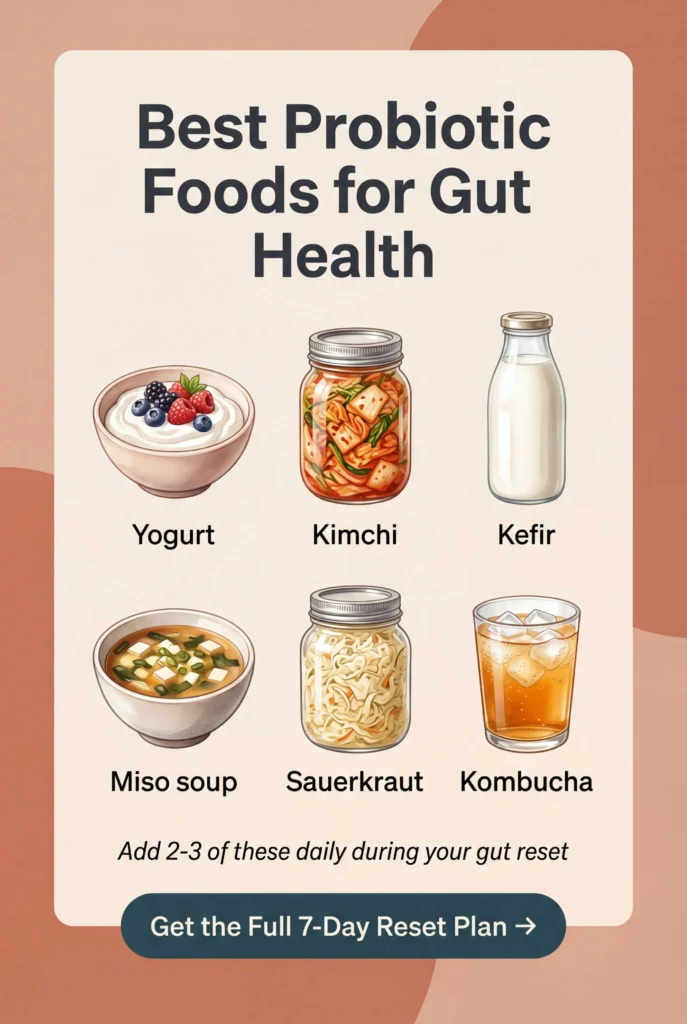
Day 3 is when you actively start repopulating your gut with beneficial bacteria through fermented, probiotic-rich foods.
Yogurt with live cultures, kefir, kimchi, sauerkraut, and miso are your best friends today. These foods introduce live bacteria strains directly into your digestive environment. According to the Mayo Clinic Health System, regular intake of probiotic foods like yogurt and kefir is among the most accessible and evidence-backed ways to support a healthy gut.
A small serving of each goes a long way. You don’t need to stack every fermented food at once — pick two or three that you actually enjoy eating and rotate them through your meals.
Day 4: Feed Your Bacteria with Prebiotic Foods
Day 4 focuses on prebiotics — the fiber-rich foods that act as fuel for the beneficial bacteria you’re building.
Probiotics get most of the attention, but prebiotics are what keep your good bacteria alive and thriving. Load up on garlic, onions, leeks, asparagus, slightly underripe bananas, and Jerusalem artichokes. These foods contain inulin and fructooligosaccharides (FOS) — fancy terms for the specific fibers your gut bacteria absolutely love.
Here’s a practical tip: cook your garlic lightly rather than eating it raw if it causes you gas at first. Your gut adjusts over time, but you don’t need to make yourself miserable in the process.
Day 5: Add Fiber and Get Your Body Moving
On Day 5, you’re stacking fiber intake alongside gentle physical movement to accelerate digestion and microbiome diversity.
Chia seeds, oats, flaxseeds, lentils, and leafy greens are excellent high-fiber additions. Even a 20-minute walk after meals does measurable good — regular movement has been shown to improve gut motility and increase microbial diversity over time. A 2024 study from Zoe found that 45% of the variance in gut microbiome alpha diversity (a measure of bacterial richness) was linked to specific metabolic markers, reinforcing how lifestyle inputs beyond diet play a real role.
Light yoga or stretching works too. The goal isn’t intense exercise — it’s consistent, gentle movement that signals your digestive system to keep things moving.
Day 6: Address Stress — Your Gut Feels Everything You Feel
Day 6 turns the focus inward, because stress is one of the most underestimated triggers of gut dysfunction.
The gut-brain axis is real. Your gut and your brain communicate constantly through the vagus nerve, and when you’re chronically stressed, your digestive system takes a hit. Elevated cortisol slows gut motility, alters the microbiome composition, and can trigger or worsen symptoms like IBS, bloating, and acid reflux.
Today, practice one deliberate stress-reduction activity. Journal for 10 minutes. Try a 5-minute breathing exercise. Put your phone away after 8pm. Sleep matters enormously here — poor sleep directly disrupts the bacterial balance in your gut, so aim for 7–9 hours tonight.
Day 7: Reflect, Sustain, and Plan Your Next Steps
Day 7 is about consolidating your progress and building a plan to keep it going.
By now, you’ve likely noticed something — less bloating, a lighter feeling after meals, maybe a small energy lift. These aren’t coincidences. Your gut bacteria respond quickly to dietary changes; research shows measurable microbiome shifts can occur within 3–5 days of dietary changes.
Spend some time today thinking about which habits felt sustainable. Which fermented foods did you enjoy? Which high-fiber swaps were easy? You don’t need to maintain a perfect reset indefinitely. You need 3–5 new habits that stick. That’s how short resets create lasting change.
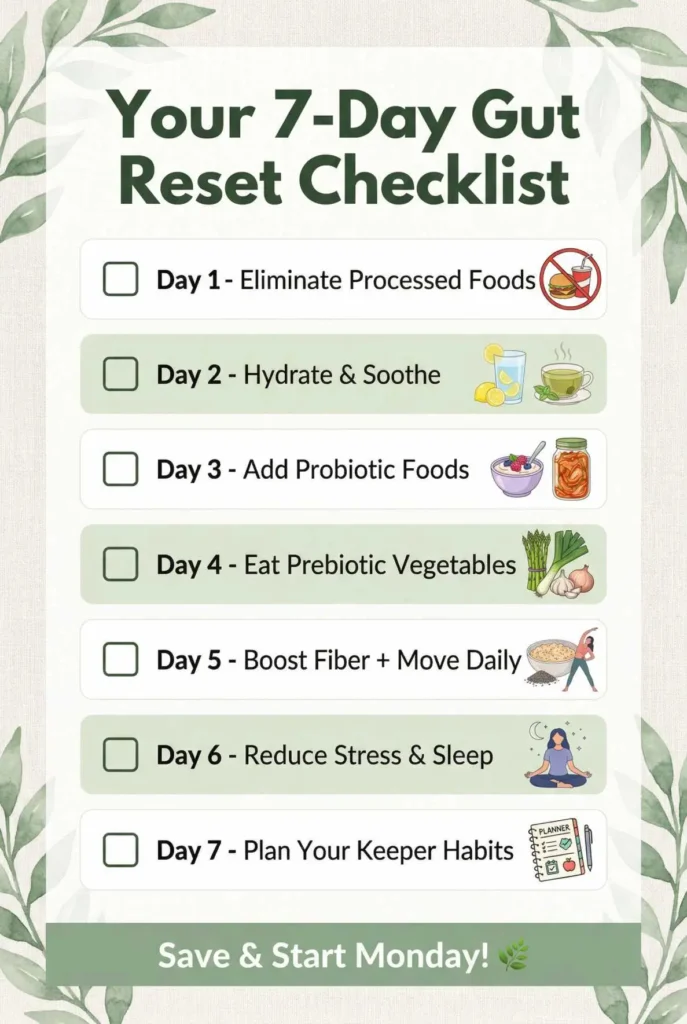
A Quick Recap: Your 7-Day Gut Reset at a Glance
| Day | Focus | Key Action |
|---|---|---|
| Day 1 | Eliminate | Cut processed foods, sugar, alcohol |
| Day 2 | Hydrate & Soothe | Herbal teas, broth, ACV water |
| Day 3 | Probiotics | Kefir, yogurt, kimchi, miso |
| Day 4 | Prebiotics | Garlic, leeks, bananas, asparagus |
| Day 5 | Fiber + Movement | Oats, chia, lentils + daily walk |
| Day 6 | Stress Reduction | Sleep 7–9 hrs, breathe, rest |
| Day 7 | Sustain | Pick your 3–5 keeper habits |
What to Realistically Expect After 7 Days
Most beginners report noticeable digestive changes within a week — but the degree varies based on your starting point.
If your diet was already fairly clean, you might notice subtle improvements: slightly less bloating, better regularity, steadier energy. If you were eating a lot of processed food, sugar, or alcohol before the reset, the difference can feel much more dramatic. Some people report a rough Day 2–3 as their body adjusts — mild headaches or fatigue are common. Push through. It almost always resolves by Day 4.
What you likely won’t get in 7 days: a complete microbiome overhaul or resolution of a diagnosed gut condition. The reset is a starting point, not a cure. Think of it as the first chapter of a longer story.
Gut Reset Supplements Worth Considering (But Not Required)
Targeted supplements can support your reset, though real food should always be the foundation.
A quality probiotic supplement (look for multi-strain formulas with Lactobacillus and Bifidobacterium strains) can be a helpful addition, especially if you’ve recently taken antibiotics. L-glutamine supports the gut lining. Digestive enzymes taken with meals can ease the transition period if you’re adding fiber quickly and experiencing gas or bloating.
These aren’t essential for a successful reset, but they can make the week more comfortable. Always check with a healthcare provider before starting new supplements, particularly if you have existing digestive conditions.